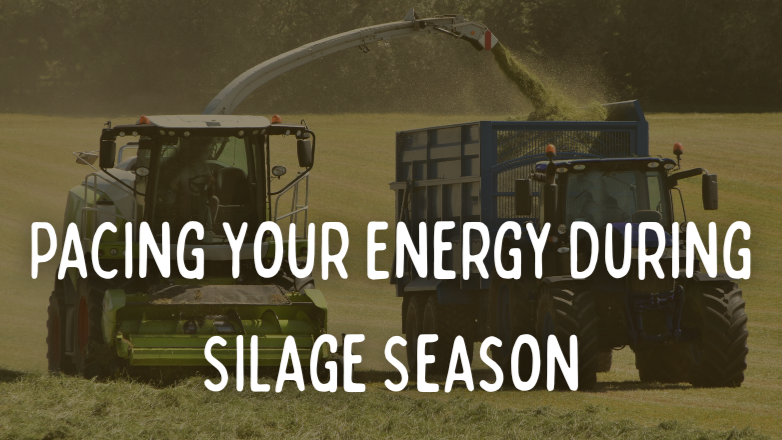
Silage season is the ultimate test of endurance on any farm. When the weather window opens, everything moves at 100 miles an hour. The pressure to get the grass down, rowed up, and into the pit before the rain hits means that sleep, proper food, and breaks usually get tossed completely out of the tractor cab.
But here is the reality…. you cannot run a tractor on an empty tank, and you can’t run your body that way either.
In Occupational Therapy, we talk a lot about pacing. On a farm, pacing isn't about doing less work or taking long, lazy breaks when the contractor is waiting. It is about energy efficiency. It’s about managing your body like a high-value piece of machinery, so you don't break down before the pit is covered.
Here are some ideas on how to pace your energy and protect your physical longevity during the silage rush:
1. Treat Your Body Like the Main Subcontractor
If a major piece of machinery starts making a strange rattling noise or overheating in the middle of a field, you don’t just slam your foot on the throttle and hope for the best, you pull over, check the fluids, and fix it before the engine seizes.
Your body gives you the exact same warning signs: a throbbing lower back, a sudden wave of heavy fatigue, or losing your temper over a minor hitch. Gritting your teeth and "pushing through" drastically increases the risk of making a costly mistake with a machine or injuring yourself. When you feel that physical overheat, take a 5-minute breather. Check your own fluids (water, not just coffee or energy drinks!) before you keep going.
2. Micro-Pacing in the Cab
When you are strapped into a tractor seat for 14 hours straight, your muscles lock up and your concentration dips. You don't need to stop the tractor to pace yourself. Use the natural pauses in the day for micro-breaks:
The Turnaround Stretch. While waiting for a trailer to back up or during a long turn on a headland, consciously drop your shoulders away from your ears and take two deep breaths.
Reset Your Posture. Prolonged sitting under vibration wreaks havoc on your lower back. Every hour, consciously adjust your position, brace your core, and change how your weight is distributed in the seat to take the pressure off your spine.
3. Change Your Fuel Strategy
Running a high-intensity silage operation on nothing but energy drinks, pork pies, and adrenaline is the quickest way to guarantee a massive crash by day three.
High-sugar snacks give you a quick 20-minute spike followed by a massive slump that leaves you feeling more exhausted than before.
Smart Fueling- Pack the cab with slow-release, whole-food snacks that don't require prep. Think nuts, bananas, hard-boiled eggs, or oatcakes. These give you a steady, sustained stream of energy that keeps your brain sharp when you’re navigating tight lanes or packing a pit late at night.
4. The Pre-Check Plan
The best way to pace a high-stress week is to eliminate the small, irritating energy-drainers before the chaos begins.
Toolboxes stocked and in the right place.
Cab windows cleaned the night before, so you aren't squinting into a low sun.
A massive flask of water packed alongside your flask of tea.
When the infrastructure around you is organised, your brain doesn't have to waste valuable energy solving unnecessary problems on top of the actual work.
The Bottom Line
Farming stronger 4longer isn't about avoiding hard work, it’s about ensuring you are physically fit to farm next week, next month, and ten years from now. Silage season will always be exhausting, but by managing your physical energy as a finite resource, you’ll protect your safety, keep your sharp edge, and get the job done right.
By Harriet McCartney 1st June 2026
Acre & Antler work with Rural and Farming communities with tailored personal support in all things from managing burnout to improving processes. To find out more click the link above or visit the services page.
We also offer a 25% off discount to all farmers seeking help just enter code AGRI25 when booking!